

You’ve spent weeks refining your brand name. It’s short, memorable, and perfectly describes what you do. You excitedly type it into a registrar… only to see the dreaded message: “Already taken.”
For most entrepreneurs, this is a dead end. For smart founders, it’s the start of a strategic process. Whether you’re dealing with a domain squatter, a legitimate business owner, or simply a parked page, you have far more options than just giving up.
Below I’ll walk you through the exact tactics used by seasoned domain investors, startup founders, and brand builders to acquire—or creatively work around—the perfect domain name.
1. How to Find Out Who Owns a Domain (And Why It Matters)
Not all taken domains are equal. Before you do anything, find out who owns it and why.
- WHOIS lookup – Use tools like ICANN Lookup, Whois.com, or DomainTools to see registrant details (unless privacy protection is active).
- Check the website – Is it an active business, a parked page with ads, or a simple “for sale” lander?
- Look for usage – A developed site with genuine content means you’re dealing with an end‑user. Check the “Copyright” date in the footer to see if the site is actively maintained. An undeveloped page full of ads is usually a domain investor (squatter).
Pro tip: If the domain is in use by a legitimate business, you can still reach out—but you’ll need a very respectful approach and a realistic budget. If it’s a squatter, you’re entering a negotiation game.
2. How to Negotiate a Domain Name Purchase
If you decide to pursue buying the domain, treat it like a business acquisition—not a casual purchase.
Do Your Homework
- Find the owner’s contact details via WHOIS (or use a broker like Escrow.com’s domain brokerage if the owner is hidden).
- Check when the domain expires. Domains close to expiry sometimes sell for less because the owner may be tired of renewing.
Keep Your Identity Anonymous for High‑Value Domains
If you’re buying a premium domain and you run a well‑funded company, the seller may hike the price if they know who’s asking. Use a dedicated broker (Sedo, BuyDomains, or an independent broker) to act as a buffer and keep your identity confidential.
Start with a Professional Outreach
Avoid using the registrar’s “make an offer” form if you can. A direct email with a clear subject line works better.
Example:
Subject: Inquiry about [DomainName.com] – potential acquisition
Keep it concise, state your genuine interest, and ask if they have a price in mind.
Use Escrow for Safety
Never send money directly. Use Escrow.com or a similar service to protect both parties. For high‑value domains, a broker often pays for themselves by preventing emotional over‑paying.
Know When to Walk Away
If the asking price is 10× your budget, move on. Domain investors often price based on how “end‑user” they think you are. If you appear desperate, the price goes up.
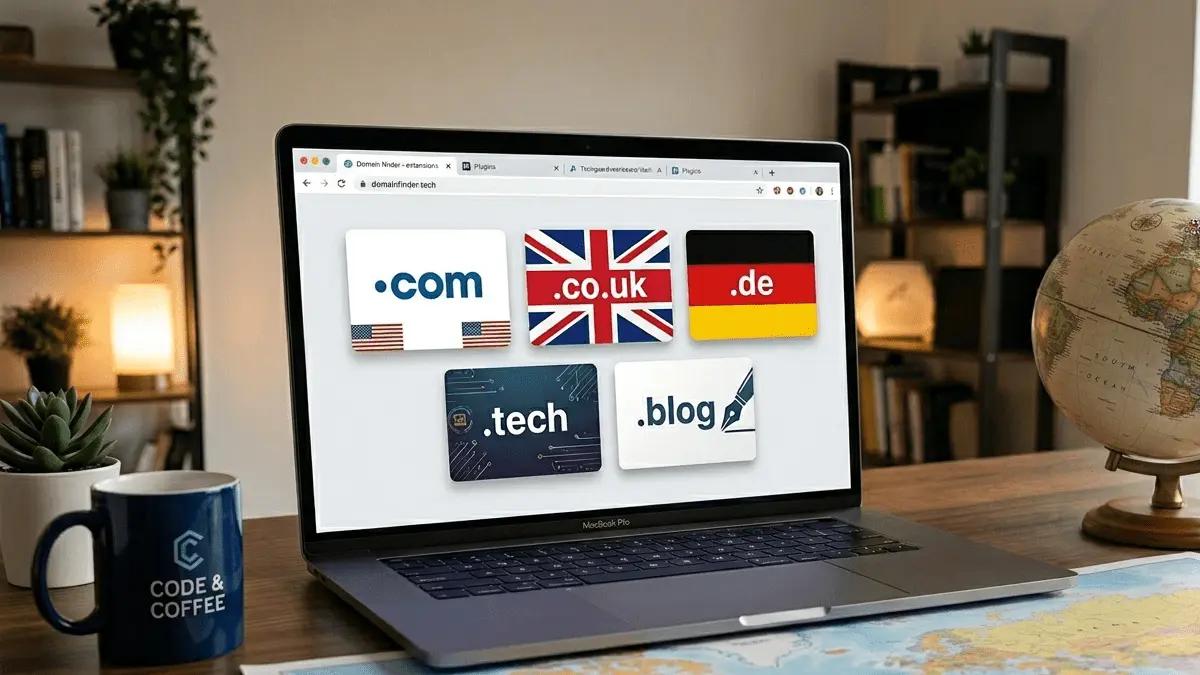
3. How to Choose a Domain Extension When .com Is Taken
When the .com is taken, many founders immediately jump to .io, .co, or .net. That can work, but you need to be smart about it.

- .io / .ai – Great for tech startups, and .ai has become the “new .com” for AI‑focused companies. But watch renewal prices—they are often premium.
- .co – Often treated as the “second .com,” but you risk losing traffic to the .com owner.
- .net / .org – Still credible for certain industries (networking, organisations).
- Country‑code TLDs – If your business is region‑focused, a .us, .uk, .ca, .in etc. can be perfect.
Reality check: If your main competitor owns the .com, using a different extension can confuse customers. In that case, adding a word (see next section) is often safer.
4. Add a Word Without Killing the Brand (The “Radio Test”)
One of the most effective pro‑level strategies is to add a short, relevant word to your desired name. This keeps the brand recognisable while making the domain available.
- Get[Name].com – e.g., GetNotion.com
- Try[Name].com – e.g., TryAirtable.com
- Hello[Name].com – e.g., HelloFresh.com
- [Name]HQ.com – e.g., DesignHQ.com
- Use[Name].com – e.g., UseFigma.com
- [Name]App.com – e.g., CalendlyApp.com
- Shop[Name].com – perfect for e‑commerce brands.
The “Radio Test”: Before committing, say the domain out loud to someone. If they can type it correctly without you spelling it out, you’ve passed the test. Avoid prefixes that cause confusion—like “the” or “my” unless they flow naturally.
5. Create a Brandable Name Instead
Sometimes the perfect name isn’t a dictionary word at all. Brandable names—like Google, Zillow, Asana—are often available as .com domains and can become iconic.
How to Generate Brandable Names
- Combine two short words (e.g., Net + Flix = Netflix)
- Use a non‑English word or a creative misspelling (e.g., Lyft)
- Add a suffix like -ly, -ify, -ster, -bee
Use Domain Marketplaces
Platforms like BrandBucket, Squadhelp, and Dan.com sell pre‑vetted brandable domains. You can often find a high‑quality .com for a few thousand dollars—much less than negotiating with a squatter.
6. Buy Directly From the Owner via Marketplaces
If the domain is listed for sale, you can often bypass negotiation altogether.
- Afternic – Largest network, integrated into many registrars.
- Sedo – Great for premium domains and auctions.
- Dan.com – User‑friendly, includes payment plans.
- GoDaddy Auctions – Good for expired or close‑out domains.
Pro move: Use the “payment plan” option (usually 3‑12 months) to acquire a premium domain without a huge upfront hit to your cash flow.
7. Tools That Every Smart Founder Should Bookmark
| Tool | Purpose |
|---|---|
| ICANN WHOIS | Free, official registrant lookup |
| DomainTools | Historical WHOIS data, ownership changes |
| ExpiredDomains.net | Find domains that are about to expire |
| LeanDomainSearch | Generate available names using keywords |
| NameMesh | Combine keywords and check multiple TLDs at once |
For deeper research, platforms like DomainIQ give you insight into a domain’s history, past owners, and estimated value.
8. What If None of This Works?
If after exhausting all options you still can’t get the domain you want, consider:
- Backordering – If the domain is expiring, use a backorder service (SnapNames, DropCatch) to try to catch it.
- Trademark watch – If you suspect the owner is cybersquatting on your trademark, consult an IP attorney about a UDRP dispute (only for clear‑cut trademark cases).
- Rebrand completely – Sometimes the best business decision is to pick a new, available name and put your energy into building the brand rather than fighting for a domain.
9. Once You’ve Secured Your Domain, Set Up the Foundation
Owning the domain is just the first step. To make it work for you, you’ll need reliable infrastructure. If you’re building a web application or a content site, understanding your hosting environment is critical.
- What is Cloud Hosting? Its Uses and Benefits – perfect for understanding modern infrastructure after you’ve locked in your domain.
- What is Cloud Computing? Its Uses and Benefits – to align your domain strategy with your technical roadmap.
Final Thoughts
Seeing your perfect domain taken can feel like a major setback, but it’s rarely a showstopper. The most successful founders treat domain acquisition as a negotiation, a creative exercise, or a strategic pivot—not a reason to quit.
Use the tools above, approach owners with professionalism, and always have a backup plan. In the end, your brand is built by what you do with the domain, not just the name itself.
This article is part of our domain & hosting series. For more technical setup guides, visit the Mukunda Software Blog.
![How Much RAM Do You Really Need in 2025? [2GB to 64GB Explained]](https://mukundasoftware.com/blog/wp-content/uploads/2025/05/best-ram-ddr4-ddr5-for-gaming-laptop.jpg)