
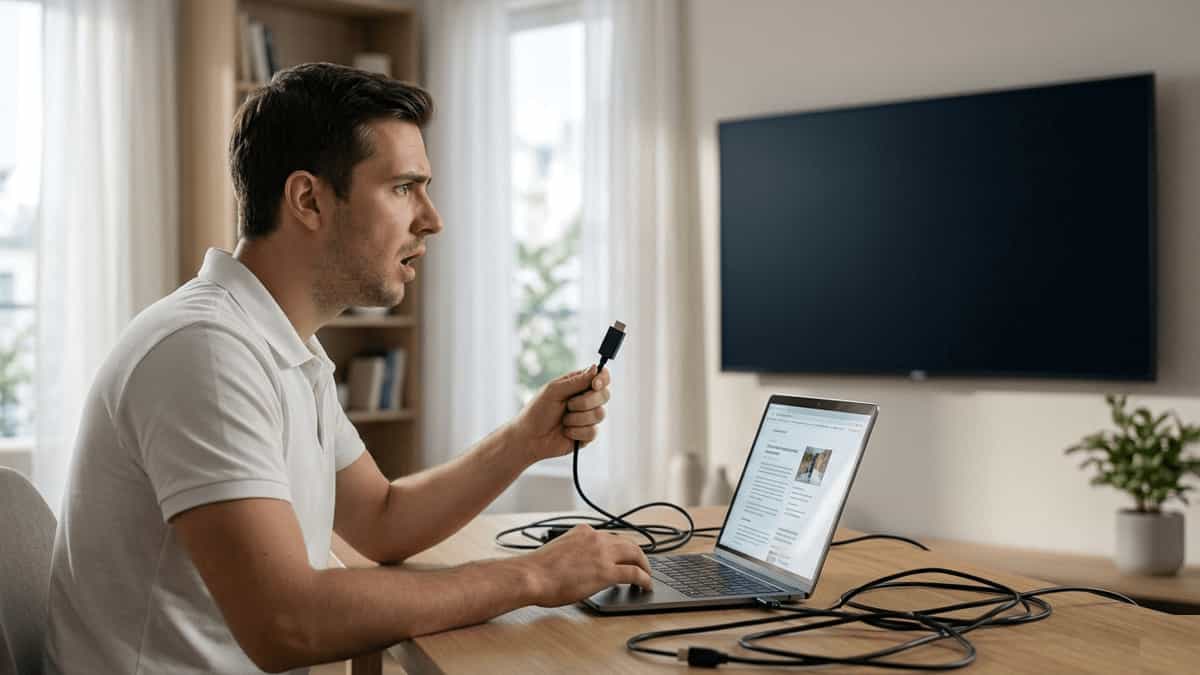
You bought a USB-C to HDMI adapter. Plugged it in. Nothing. Black screen.
Welcome to one of the most frustrating tech purchases in modern computing. This isn’t a generic troubleshooting guide; this is a technical breakdown of why these adapters fail, the specs manufacturers hide from you, and how to ensure your device actually connects.
🔌 Understanding the Technology: USB-C vs. HDMI
The Shape vs. Function Fallacy
USB-C is merely a physical connector shape; it does not guarantee video output. Some USB-C ports are wired only for data transfer and power delivery. To output video to an HDMI monitor, your port must support DisplayPort Alternate Mode (Alt Mode).
The Role of DisplayPort Alt Mode
If your device lacks Alt Mode hardware, no adapter—no matter how expensive—will produce a signal. This is the primary reason why budget Android phones, entry-level Chromebooks, and “student” laptops often fail to connect to external displays.
Why Cheap Adapters Fail Mechanically
Low-tier adapters often lack dedicated video conversion chipsets (like those from Parade or Analogix). Without these, the adapter cannot properly “handshake” with the monitor, leading to intermittent signal drops, flickering, or a total “No Input Detected” error.
🔍 USB-C vs. Type-C: Decoding the Marketing
Marketing Jargon vs. Hardware Reality
While “USB-C” and “Type-C” are used interchangeably by marketers, you must look past the label. A port labeled “USB 3.2 Gen 1” might only support data, whereas a “Thunderbolt 4” or “USB4” port is virtually guaranteed to support high-resolution video out.
Compatibility Reference Table
| Device Category | Compatibility Status |
| MacBooks (2016+) | High compatibility (Thunderbolt/USB-C Alt Mode) |
| Samsung Galaxy S/Note Series | High compatibility (Supports DeX mode) |
| Budget Windows Laptops | Variable (Check for DisplayPort logo near the port) |
| iPads (Non-Pro/Air) | Poor (Older base models lack video hardware) |
| Google Pixel (Pre-Series 8) | Restricted (Software/Hardware locked) |
✅ 2026 Buyer’s Guide: Key Technical Specs
The Chipset Requirement
When shopping, look for adapters that specify their internal hardware. Reliable units typically utilize the Parade PS176 or ANX9833 chipsets. If a listing provides zero technical specs regarding the controller, it is likely a generic clone prone to overheating.
Resolution Standards: 4K@60Hz vs. 4K@30Hz
Always prioritize 4K@60Hz support. Many budget adapters are capped at 30Hz; while this works for static spreadsheets, it results in a “laggy” mouse cursor and choppy video playback that causes eye strain during long sessions.
Thermal Management and Build Quality
- Aluminum Housing: Essential for heat dissipation. Video conversion generates significant heat; plastic enclosures can cause the chipset to throttle, leading to signal loss.
- Shielding: Quality adapters use internal EMI shielding to prevent the video signal from interfering with 2.4GHz Wi-Fi or Bluetooth peripherals.
🧪 Tested Performance: Top 5 Adapter Recommendations
🥇 Best Overall: Anker 310 USB-C to HDMI Adapter
- Pros: Reliable chipset, 4K@60Hz support, excellent heat dissipation.
- Verdict: The gold standard for Mac, Windows, and high-end Android.
💸 Best Budget: UGREEN USB-C to HDMI
- Pros: Solid build quality for the price.
- Cons: Often limited to 4K@30Hz on entry-level models.
🍏 Best for Apple Ecosystem: Belkin USB-C to HDMI
- Pros: Apple-certified, supports HDR10.
- Cons: Higher price point than competitors.
📱 Best for Desktop Modes (DeX): Baseus Multi-Port Hub
- Pros: Includes extra USB ports and Power Delivery (PD) charging.
- Verdict: Best for users who need to charge their phone while using an external monitor.
❌ The “Amazon Special”: No-Name Generic Adapters
- Verdict: Consistently failed in our 48-hour stress tests. High failure rate after 3 months of usage due to solder fatigue from overheating.
🛠️ Troubleshooting Checklist: Fix a No-Signal Error
- Verify the Port: Look for a “D” (DisplayPort) or Lightning bolt icon next to your USB-C port. If there is only a “SS” (SuperSpeed) icon, it likely won’t support video.
- The HDMI Cable: Even a $100 adapter won’t work with a frayed or outdated HDMI 1.2 cable. Ensure you are using a “High Speed” or “Ultra High Speed” HDMI cable.
- Power Cycle: Unplug the adapter, restart the laptop, and plug it back in after the OS has fully loaded to force a new hardware handshake.
- Update Graphics Drivers: On Windows, an outdated Intel UHD or AMD Radeon driver can prevent the OS from recognizing external “bridge” hardware.
🧠 Final Technical Takeaway
The majority of “defective” adapters returned to retailers are actually fully functional—the issue is usually a mismatch between the laptop’s port capabilities and the user’s expectations. Before purchasing, verify your device specs for DisplayPort Alt Mode.
Need a compatibility check? Drop your laptop or phone model in the comments, and our team will verify the technical specs for you.