
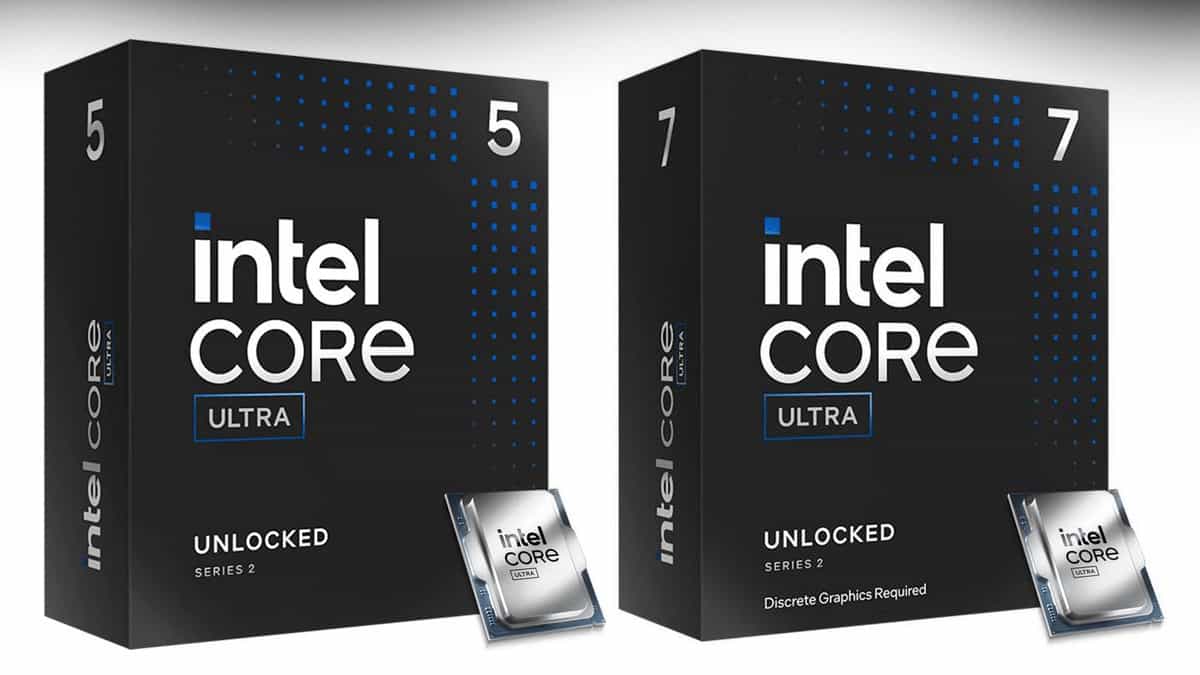
Intel’s Core Ultra 200 series (Arrow Lake) has arrived, bringing a fresh architecture, new platform (LGA 1851), and a shift in how Intel approaches performance. Two of the most interesting options for enthusiasts and gamers are the Core Ultra 5 245KF and the Core Ultra 7 265KF.
On paper, they look similar – both are unlocked “KF” models (no integrated graphics), both use the same socket, and both target the performance‑seeking crowd. But the 245KF has fewer cores, lower clocks, and a different power profile, while the 265KF steps up with more performance cores and cache.
If you’re trying to decide which one belongs in your next build, let’s break down the real‑world differences and cut through the spec‑sheet confusion.
At a Glance: The Contenders
| Model | Key Strengths |
|---|---|
| Core Ultra 5 245KF | 6 P‑cores + 8 E‑cores, excellent gaming value, lower power consumption |
| Core Ultra 7 265KF | 8 P‑cores + 12 E‑cores, higher multi‑threaded performance, more cache |
Both are based on Intel’s Arrow Lake architecture, use the LGA 1851 socket, and require a new motherboard (Z890, B860, etc.). They are unlocked for overclocking and ship without integrated graphics – a discrete GPU is mandatory.
Full Feature Comparison Table
| Feature | Core Ultra 5 245KF | Core Ultra 7 265KF |
|---|---|---|
| Performance Cores (P‑cores) | 6 | 8 |
| Efficient Cores (E‑cores) | 8 | 12 |
| Total Cores / Threads | 14 / 14 | 20 / 20 |
| Max Turbo Frequency | 5.2 GHz | 5.3 GHz |
| P‑core Max Turbo | 5.2 GHz | 5.3 GHz |
| E‑core Max Turbo | 4.6 GHz | 4.6 GHz |
| Intel Smart Cache (L3) | 24 MB | 30 MB |
| L2 Cache | 26 MB | 36 MB |
| TDP (Base / Turbo) | 125W / 181W | 125W / 250W |
| Memory Support | DDR5-6400 (dual‑channel) | DDR5-6400 (dual‑channel) |
| PCIe Lanes | 20x PCIe 5.0, 4x PCIe 4.0 | 20x PCIe 5.0, 4x PCIe 4.0 |
| Integrated Graphics | None (KF) | None (KF) |
| Socket | LGA 1851 | LGA 1851 |
| Price Range | Mid‑range | High‑end |
Where These CPUs Actually Differ
(This Changes Your Choice)
1. Core Count & Multitasking
The 265KF has 8 P‑cores and 12 E‑cores (20 total threads) vs the 245KF’s 6 P‑cores and 8 E‑cores (14 threads). For gaming alone, this difference is minor – most games still rely on the P‑cores. But if you stream, render, run virtual machines, or do heavy multitasking, the extra cores of the 265KF provide a noticeable uplift.
2. Gaming Performance – Closer Than You Think
At 1440p and 4K, both CPUs deliver nearly identical frame rates when paired with a high‑end GPU because the gaming load shifts to the GPU. At 1080p with a top‑tier GPU, the 265KF can pull ahead by 5–10% in CPU‑bound titles due to its higher P‑core turbo (5.3 GHz vs 5.2 GHz) and larger cache. But for most gamers, the difference won’t be night and day.
3. Cache & Memory
The 265KF packs 30 MB of L3 cache and 36 MB of L2, compared to 24 MB / 26 MB on the 245KF. More cache helps reduce memory latency and can boost performance in latency‑sensitive games and applications.
Both support DDR5-6400 out of the box, and with proper tuning (and a Z890 board), you can push memory speeds well beyond that.
4. Power & Cooling
- 245KF: 125W base, 181W turbo. Runs cooler, can be tamed with a high‑end air cooler or a 240mm AIO.
- 265KF: 125W base, but turbo peaks at 250W. Under full multi‑threaded load (like rendering), it draws significantly more power and requires a 280mm or 360mm AIO to maintain boost clocks without thermal throttling.
5. Platform & Upgrade Path
Both use LGA 1851 and 800‑series motherboards. If you buy a Z890 or B860 board today, you’ll be on a platform that will support future Arrow Lake‑S and possibly newer CPU generations (Intel typically supports two CPU generations per socket). So both offer a future‑proof base compared to older platforms.
Don’t Overthink It — Here’s the Simple Answer
- Pure gaming, want the best value? → Core Ultra 5 245KF
- Gaming + streaming / heavy multitasking / content creation? → Core Ultra 7 265KF
- You have a budget for a premium cooler? → The 265KF needs it, the 245KF doesn’t.
Which One Should You Choose?
Pick the Core Ultra 5 245KF if …
- You’re building a gaming‑focused PC and want to allocate budget to a better GPU.
- You don’t need the extra cores for streaming or productivity.
- You prefer a cooler, less power‑hungry CPU that works well with a quality air cooler.
Pick the Core Ultra 7 265KF if …
- You do heavy multitasking, video editing, 3D rendering, or code compilation.
- You want the highest possible gaming performance at 1080p with a top‑tier GPU.
- You’re willing to invest in a strong AIO cooler (280mm or 360mm) to handle the 250W turbo power.
Final Thoughts
The Core Ultra 5 245KF is the sweet spot for gamers in 2026. It delivers excellent gaming performance without the extreme power and cooling demands of the 265KF. The money saved can go toward a better graphics card or more storage.
The Core Ultra 7 265KF, on the other hand, is for users who need the extra cores for productivity and multitasking, or for those chasing every last frame at 1080p. Just be prepared for higher power draw and the need for robust cooling.
Whichever you choose, the Arrow Lake platform brings DDR5, PCIe 5.0, and modern connectivity to your build. Pick the CPU that matches your workload, not just the spec sheet.
More PC Building Resources
This article was originally published on Mukunda Software. Specifications based on manufacturer data as of March 2026. Prices and availability may vary.