

The handheld gaming PC market has evolved rapidly. By April 2026, three devices dominate the conversation, but not in the way you might expect. The ASUS ROG Ally X (now often called the ROG Xbox Ally X due to a deeper Microsoft partnership), the Valve Steam Deck OLED, and the Lenovo Legion Go each offer unique strengths. Below, we break down their specs, real-world handling, and the latest 2026 software shifts – plus what’s on the horizon.
Quick Comparison Table (2026 Update)
| Feature | ROG Xbox Ally X | Steam Deck OLED | Lenovo Legion Go |
|---|---|---|---|
| Display | 7-inch, 1080p, 120Hz, VRR | 7.4-inch, 800p, 90Hz, OLED | 8.8-inch, 1600p, 144Hz, IPS |
| Processor | AMD Ryzen Z1 Extreme | Custom AMD APU (Van Gogh) | AMD Ryzen Z1 Extreme |
| RAM | 24GB LPDDR5 | 16GB LPDDR5 | 16GB LPDDR5X |
| OS | Windows 11 + Xbox Handheld UI | SteamOS (Linux) | Windows 11 (Legion Space) |
| Battery Life | ~13h (light) / 2-3h (gaming) | ~2-8h (OLED efficient) | ~2h (AAA gaming) |
| Weight | ~715g (1.58 lbs) | ~640g (1.41 lbs) | ~854g (1.88 lbs) |
| Starting Price | $999.99 | $549 (OLED) / $399 (LCD/refurb) | $699 |
🎮 ASUS ROG Xbox Ally X
The Performance King with a Console Soul

✅ Pros
- Top-tier performance – AMD Z1 Extreme + 24GB RAM handles AAA titles at 1080p/60+ FPS.
- Excellent battery life – 80Wh battery leads the Windows handheld class.
- VRR display – 120Hz VRR eliminates screen tearing even when frame rates dip.
- Improved ergonomics – Contoured grips make it comfortable for long sessions.
- New Xbox UI layer – Thanks to the 2026 ASUS‑Microsoft partnership, the Ally X now boots into a dedicated Xbox Handheld Experience interface, fixing much of the “Windows friction” we used to complain about.
❌ Cons
- Premium price – $999 remains steep, though the new Xbox software adds value.
- Smaller screen – 7 inches feels cramped compared to the Legion Go.
- Windows still lurks – You can drop to the desktop, but most users won’t need to.
⚖️ Weight & Handling
At 715g, it’s a middleweight. The ergonomic redesign makes it feel lighter than the number suggests – far more balanced than the Legion Go, and many users prefer it over the Steam Deck’s smaller grip profile.
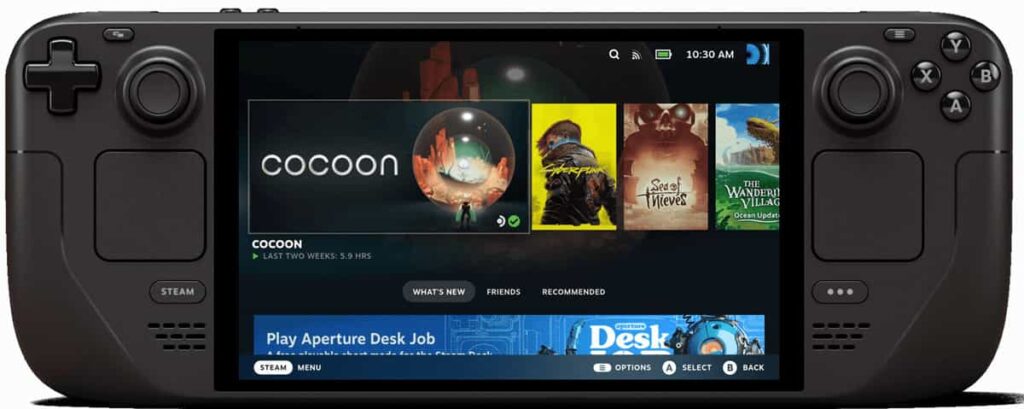
🕹️ Steam Deck OLED
The Refined All‑Rounder (Still a Top Pick)
✅ Pros
- Stunning OLED panel – 7.4 inches of perfect blacks and vibrant colors.
- Seamless SteamOS – Suspend/resume works flawlessly; console‑like simplicity.
- Best‑in‑class ergonomics – The most comfortable handheld for most hand sizes.
- Excellent value – The OLED model starts at $549 (the $399 price you see is for the older LCD model or refurbished units).
❌ Cons
- Lower performance ceiling – Struggles with the most demanding 2026 AAA titles (e.g., Black Ops 7 at high settings).
- 800p resolution – Not as sharp as 1080p on a screen this size.
- Anti‑cheat limitations – Some multiplayer games require Windows, though compatibility has improved.
⚖️ Weight & Handling
640g – the lightweight champion. Combined with perfect weight distribution, the Steam Deck remains the king of couch and commute gaming.
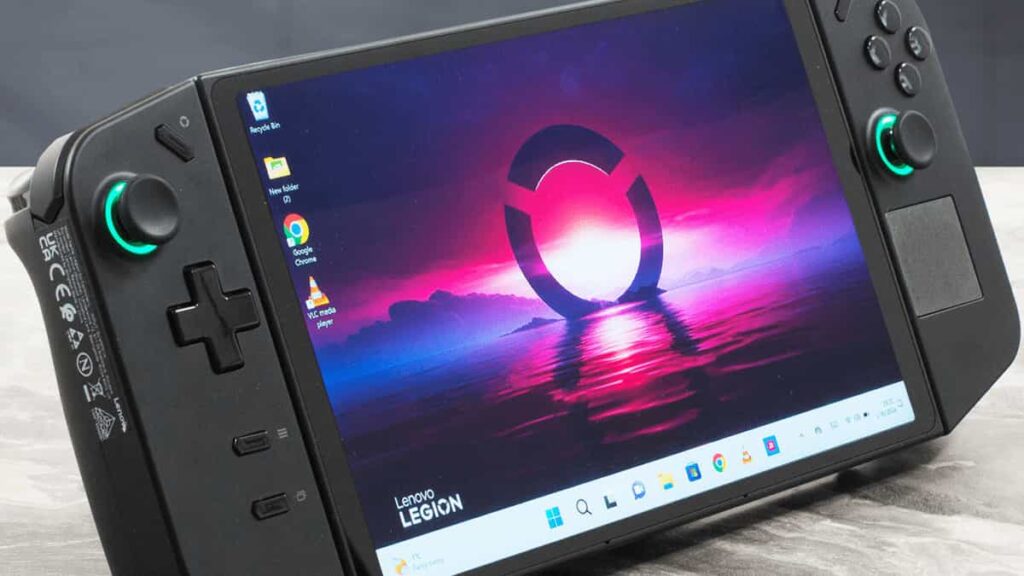
🖥️ Lenovo Legion Go
Big Screen, Big Ambition, Big Compromises
✅ Pros
- Massive 8.8‑inch, 1600p, 144Hz display – Incredibly immersive for gaming and media.
- Detachable “Legion” controllers with a vertical mouse mode for FPS games.
- Built‑in kickstand – Great for tabletop play.
- Now supports SteamOS / Bazzite – In 2026, many users are installing official SteamOS or Bazzite forks, giving them the best of both worlds: the huge screen with Steam Deck’s software ease.
❌ Cons
- Very heavy – 854g leads to arm fatigue during long handheld sessions.
- Poor battery life – Pushing that giant screen drains the battery in ~2 hours of AAA gaming.
- Clunky Legion Space software – Still buggy, though the SteamOS workaround helps.
- Awkward ergonomics – Many users complain the grips are too small for the device’s size.
⚖️ Weight & Handling
The Legion Go is a beast. You will feel the 1.88 lbs immediately. Most users recommend resting it on a pillow or table for longer play.
Complete Comparison Table (All Specs Included)
| Feature | ROG Xbox Ally X | Steam Deck OLED | Lenovo Legion Go |
|---|---|---|---|
| Display Size & Type | 7-inch IPS | 7.4-inch OLED | 8.8-inch IPS |
| Resolution | 1920 x 1080 | 1280 x 800 | 2560 x 1600 |
| Refresh Rate | 120Hz | 90Hz | 144Hz |
| VRR (Variable Refresh Rate) | ✅ Yes (FreeSync) | ❌ No | ❌ No |
| Processor | AMD Ryzen Z1 Extreme | Custom AMD APU | AMD Ryzen Z1 Extreme |
| RAM | 24GB LPDDR5 | 16GB LPDDR5 | 16GB LPDDR5X |
| Storage | 1TB NVMe SSD | 512GB / 1TB NVMe SSD | 512GB / 1TB NVMe SSD |
| Operating System | Windows 11 + Xbox UI | SteamOS | Windows 11 + Legion Space |
| Battery Capacity | 80Wh | 50Wh | 49.2Wh |
| Battery Life (AAA gaming) | 2–3 hours | 2–4 hours | ~2 hours |
| Weight | ~715g | ~640g | ~854g |
| Detachable Controllers | ❌ No | ❌ No | ✅ Yes |
| Built-in Kickstand | ❌ No | ❌ No | ✅ Yes |
| Trackpads | ❌ No | ✅ 2x | ❌ No |
| Back Buttons | 2 | 4 | 4 |
| Software Polish | Good | Excellent | Poor |
| Starting Price | $999 | $549 (OLED) | $699 |
🆕 What’s on the Horizon? (2026 Rivals)
The three‑way race is heating up. Keep an eye on:
- MSI Claw 8 AI+ – Powered by Intel’s Lunar Lake / Arrow Lake chips, with dedicated AI accelerators. Early reviews praise its performance but note driver growing pains.
- Lenovo Legion Go 2 – Rumored to feature the AMD Z2 Extreme chip and an OLED screen, potentially solving two of the biggest complaints (battery and display).
- Other Z2 Extreme handhelds – Several manufacturers are expected to launch devices with AMD’s next‑gen chip by late 2026.
For now, the three devices above are the proven kings, but the landscape is shifting fast.
💬 Real User Sentiment (Reddit, Forums, Reviews)
- On the ROG Xbox Ally X’s new UI: “The Xbox Handheld Experience makes it feel like a real console. I haven’t touched the Windows desktop in weeks.” – Reddit r/Handhelds
- On the Legion Go with SteamOS: “Installed Bazzite on my Go – it’s like a Steam Deck on steroids. The screen is insane, and I don’t miss Legion Space at all.” – Steam Deck community
- On weight: “I love my Legion Go, but after an hour my wrists hurt. My Steam Deck OLED? I can play all night.” – Amazon verified review
- On MSI Claw 8 AI+: “Good performance, but drivers are still iffy. Wait for a few more updates.” – Newegg review
👑 Which One Should You Buy in 2026?
- 🎮 Choose the ROG Xbox Ally X if… you want top‑tier performance, long battery life, and a console‑like Windows experience without the desktop headaches. It’s the best all‑around Windows handheld – especially now with the Xbox UI.
- 🕹️ Choose the Steam Deck OLED if… comfort, OLED beauty, and a seamless out‑of‑box experience matter most. You don’t mind dialing down settings for the newest AAA games. Best value for most people.
- 🖥️ Choose the Lenovo Legion Go if… you crave a massive, high‑res screen and are willing to tinker (e.g., installing SteamOS). Be prepared for the weight and battery life trade‑offs.
❓ FAQ
1. Does the ROG Ally X really have an Xbox UI now?
Yes – the ASUS‑Microsoft partnership introduced the “Xbox Handheld Experience” as a boot‑option. You can still access Windows, but most users won’t need to.
2. Can I run SteamOS on the Legion Go?
Absolutely. In 2026, Lenovo officially supports SteamOS on some models (like the Legion Go S), and community tools like Bazzite work perfectly on the standard Go.
3. Is the MSI Claw 8 AI+ better than these?
Not yet – it has potential, but driver and game compatibility issues remain. We recommend waiting for firmware updates.
4. Which is lightest and most comfortable?
The Steam Deck OLED (640g) is the lightest and most comfortable. The Ally X is a close second. The Legion Go is heavy – plan to use it on a table.
📚 Further Reading (From MukundaSoftware)
Final note: All pricing and software features are current as of April 2026. Handheld PC gaming is evolving fast – check back for updates on Z2 Extreme devices and the MSI Claw.